Why smartTOS?
Vernetzter, intermodaler Verkehr ist die Basis für nachhaltigen Transport
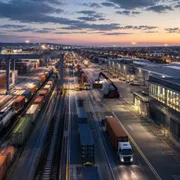
Unsere Vision ist es, den heutigen Betrieb eines Intermodalterminals von einer Schnittstelle der Verkehrsträger zu einem voll integrierten und kooperativen Element einer künftig voll digitalen Logistikkette zu entwickeln.
Einfache und zukunftssichere Digitalisierung von Terminals
Wir wollen unseren Kunden die Herausforderungen der Digitalisierung so einfach wie möglich machen, damit Sie sich auf Ihre Kernkompetenzen konzentrieren können.
Networked, intermodal traffic is the basis for sustainable transport.
Our vision is to develop the current operation of an intermodal terminal from an interface of transport carrier to a fully integrated and cooperative element of a future fully digitalized logistics chain.
Simple and future-proof digitization of terminals.
We want to make the challenges of digitalization as easy as possible for our customers so that you can fully concentrate on your core competencies.
Your advantages with smartTOS
- Intuitive application design with low training necessity
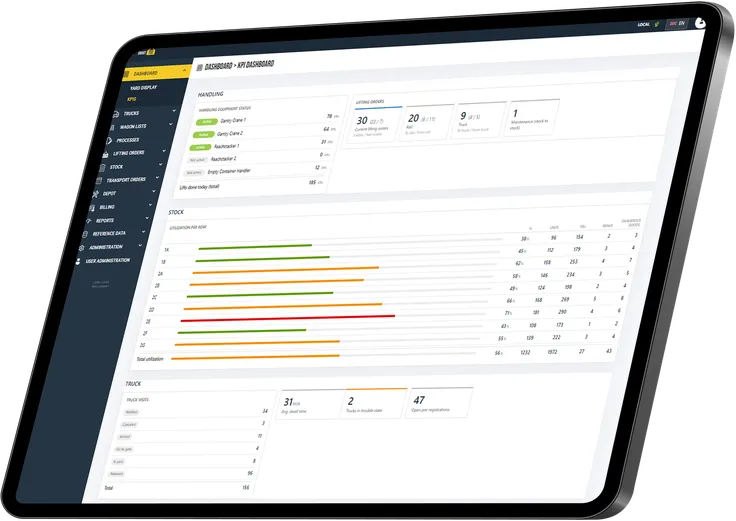
- Digital mapping of relevant core processes for efficient, quality-assured operation
- Data analysis and interface management for ongoing operational optimization
- Reliable and scalable Software as a Service operation
- Best practice processes from 25 years of experience with intermodal terminals
- smartTOS grows with your requirements through continuous enhancements/integration
- Modular design allows agile commitment and enhancement according to your needs
- Demand-oriented Full-Service License Fees instead of major investments
Connected. Modular. Efficient.
Functions and technology
Process-oriented modules to optimize your workflows
Modules in detail
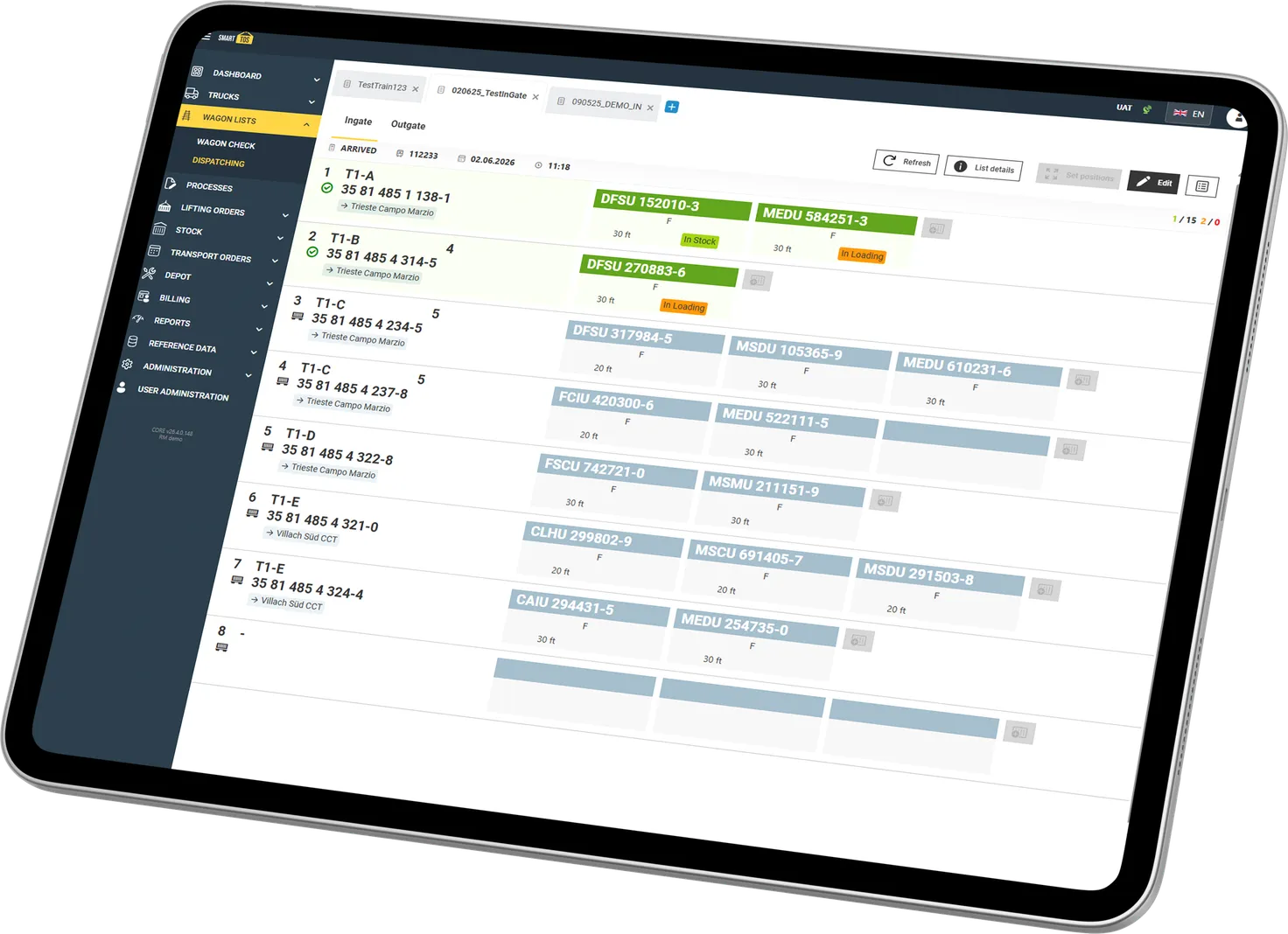
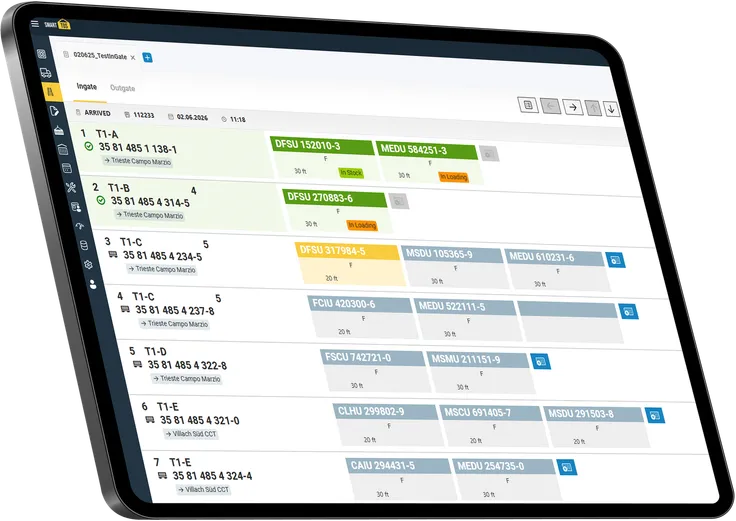
- Centralized control and dispatching of all wagon loading and unloading activities at the terminal
- Real-time tracking of incoming and outgoing transport units
- Efficient assignment of loading positions based on previously used twist-lock positions
- Prioritization options according to operational requirements
- Automated support for direct transshipments
- Mobile inspection of wagons upon arrival and departure
- Documentation of damages and actual conditions
- Real-time data transfer between inspection, dispatch, and crane systems
- Flexible response and action options for dispatchers depending on terminal operations
- Fast and reliable dispatching process for block trains and wagon groups, including train-to-train transshipments
- SelfCheckIn pre-registered trucks for pickup and delivery
- Identification based on truck and reference numbers
- Planning and optimization of round trips
- Vehicle status tracking within the terminal
- Desk check-in, drive-through, or mobile check-in options
- Documentation of all relevant inbound and outbound information
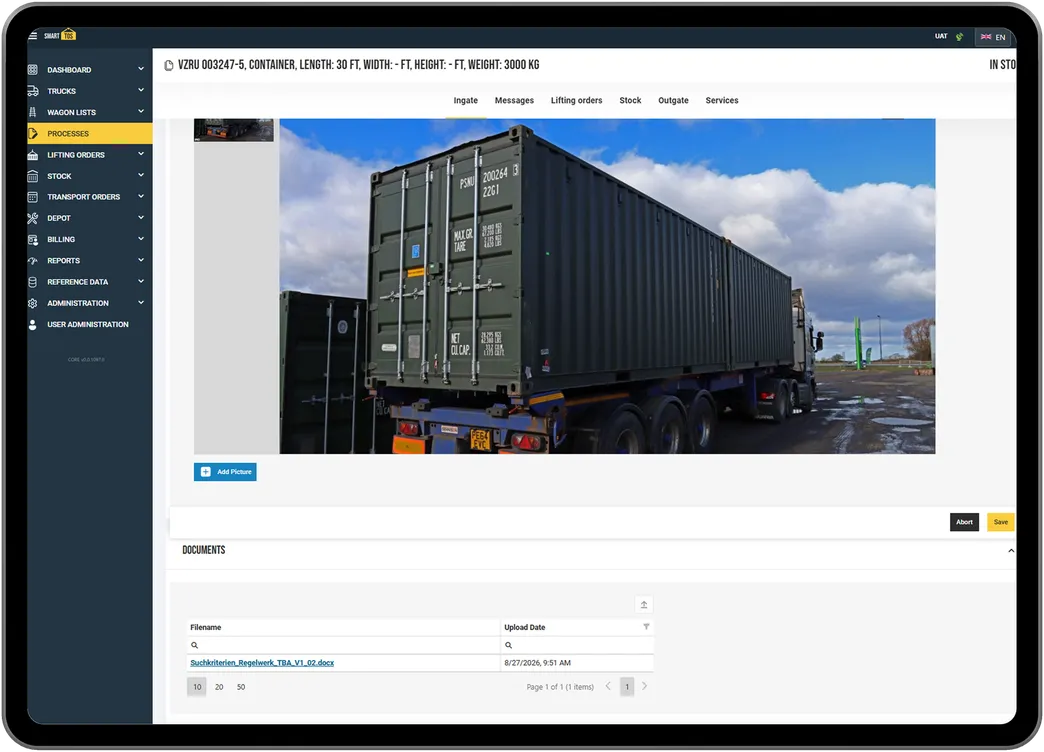
- Mobile inspection and structured documentation of damages and actual conditions
- Seamless merging of physical arrival data with electronic order information
- Verification and validation of submitted customs and hazardous goods data
- Automated generation of lifting orders and customer information
- Identification and verification of pickup authorizations
- Preparation of waybill data
- Provision of all transport-relevant data for operational and commercial processing
- Flexible yard configuration within the system (storage areas, divisions, sectors, stacking heights, etc.)
- Customizable inventory strategies
- Capacity management based on georeferenced positioning of loading units (as placed by handling equipment)
- Periodic inventory checks supported by mobile data devices
- Optimized sequencing and assignment of lifting orders to handling equipment based on defined loading strategies
- Geo-based operational zones and route optimization
- Automatic calculation of the optimal storage location
- Integration of the position and movement of lifting equipment
- Flexible user role models for optimal mapping of your organizational structure
- Secure authentication using standard tools
- Definition and administration of the handling equipment in use
- Geo-based definition and visualization of the terminal infrastructure
- Predefined base performance reports and statistics
- Analysis of historical data
- Master data for intermodal loading units, trucks, wagons, and vessels
- Rail station data (according to UIC/UIRR standards)
- RID/ADR codes including descriptions (UN standard)
- Repair codes according to ISO-9897
- EU and ISO location codes and railway administration codes
- Master data for railway undertakings (according to UIRR and UIC standards)
- Fully electronic processing of empty container references
- Management of return and release quotas
- Depot management and invoicing of depot services
- Integrated documentation of inspections
- Standardized recording of damages and required repairs
- Repair cost calculation based on check reports according to international standards (ISO-9897)
- Management and planning of bookings
- System-assisted assignment of loading units to order data
- Capacity planning and acceleration of processing workflows
- Administration of customer master data
- Maintenance of customer- and unit-specific pricing
- Automated calculation of storage and handling charges
- Invoicing of all terminal services
- Service data export for internal accounting systems
- Structured exchange of status updates for intermodal loading units
- Optimization of terminal processes and planning via import of pre-arrival and booking data
- Receipt and processing of order information via defined, standardized interfaces
- Automated provision of stock reports
- Export of billing data
- Integration of OCR-based identification for trucks and wagons
- Identification of intermodal loading units
- Damage documentation and recording of RID labels
- References to image/video material for documentation and claims processing
- Integration of handling equipment
- Processing of positioning data from completed lifts
- Automated assignment to storage locations
- Transmission of lifting orders for automated movements
- Web application as an information platform for freight forwarders and customers
- Pre-registration of pickups and drop-offs
- Access to assigned storage and incoming containers
- Centralized customer and master data management
- Multi-Terminal-Controlling
- Integration with data warehouse systems
Future-proof system architecture
- Offline-capable web application for desktop and mobile devices
- Scalable SaaS EU-cloud with top-tier security standards or optional on-premise operation
- Continuous product development and maintenance
- Active security screening and functional monitoring (health checks) with 24/7 support
- Centralized logging for efficient error analysis
- Simple interface integration enabled by a clear service architecture
Who are we?
smartTOS is the product of an established IT company with a large number of successfully implemented, business-critical software solutions from the primary areas of transport, logistics and energy. In doing so, we build on many years of experience along the entire IT value chain. From analysis and conception to implementation and reliable operation of complex systems. The transferred pillars of our team are competence, innovation and respect – internally and externally.
Erich Possegger
Logistikexperte
Erich is our logistics expert with more than 25 years of experience in combined freight transport. As a consultant for intermodal transport, terminals and rail freight transport, we ensure that future innovations flow directly into product development.
Helmut Winhofer
Produktmanager
As a product manager, Helmut is responsible for collecting and defining all requirements for our customers. With more than 15 years of experience with large IT projects in the transport sector, he will find the right solution for your individual challenges.
Markus Struggl
Solution Architect
Markus ensures a flexible, technical basis that is up to date. His many years of IT experience from a wide variety of industries make smartTOS a future-proof, modern solution.
Nataliia Avdosieva
UX Designerin
Natasha finds a simple solution for every use case. With a constant focus on intuitive usability, it ensures low training requirements for your employees.
Luka Rivic
UX Designer
With a lot of commitment, Luka takes care of translating complex processes into simple procedures. The result are innovative UIs that significantly support everyday processes.
Abdül-Kerim Yalcin
Operation & Support
Abdül-Kerim is our cloud expert. He ensures that the system is operated securely and reliably in the Microsoft Azure environment.
David Antolik
Developer
David is our frontend guy. With an eye on details and stable functions, he puts the visions of our UX team into practice.
Peter Bednarcik
Developer
Peter is our all-rounder. With many years of experience with complex software solutions, he finds the right technological solution for every requirement.
Lenaic Cormier
Developer
Lenny is responsible for Backend and the DevOps pipeline. He thus ensures a quality-assured process to bring new developments into production efficiently and comprehensibly.
Shaping the Future of Your Terminal Operations
How can you enhance transparency, increase efficiency, and future-proof your terminal operations?
In our blog, we share expert insights on how modular TOS architectures, intelligent system integrations, and strategically designed digitalization initiatives deliver sustainable, measurable value.
Latest Blog Posts:
How eFTI Data Is Transforming the Future of Sustainable Freight Transport
How eFTI data is transforming sustainable freight transport in Europe: standardized digital freight information, greater...
Mehr dazuDigital Transformation at Terminal Kapfenberg
From manual processes to real-time terminal management: How smartTOS enabled the digital transformation of Terminal...
Mehr dazusmartTOS: The next-generation Terminal Operating System
smartTOS is not a traditional software tool, but an integrated operating system for terminal processes....
Mehr dazuKontakt
ADDRESS
Evolit GmbH
Marxergasse 1B/Top 6,
1030 Vienna, Austria
TELEPHONE
Tel.: +43-660-839-20-94
vie.office@evolit.com