
Helmut Winhofer
Key Takeaways
- Intermodal terminals are evolving from pure transshipment sites into digital hubs within modern logistics networks
- Connected infrastructures, automated workflows and platform integration are fundamentally reshaping their role
- Digital systems increasingly determine the performance, scalability and resilience of logistics chains
Intermodal Logistics in Transition
Intermodal logistics is undergoing a profound structural transformation. Rising transport volumes, volatile markets, ambitious climate targets and growing regulatory requirements are reshaping the industry landscape. At the same time, expectations around transparency, predictability and efficiency across the entire transport chain continue to increase.
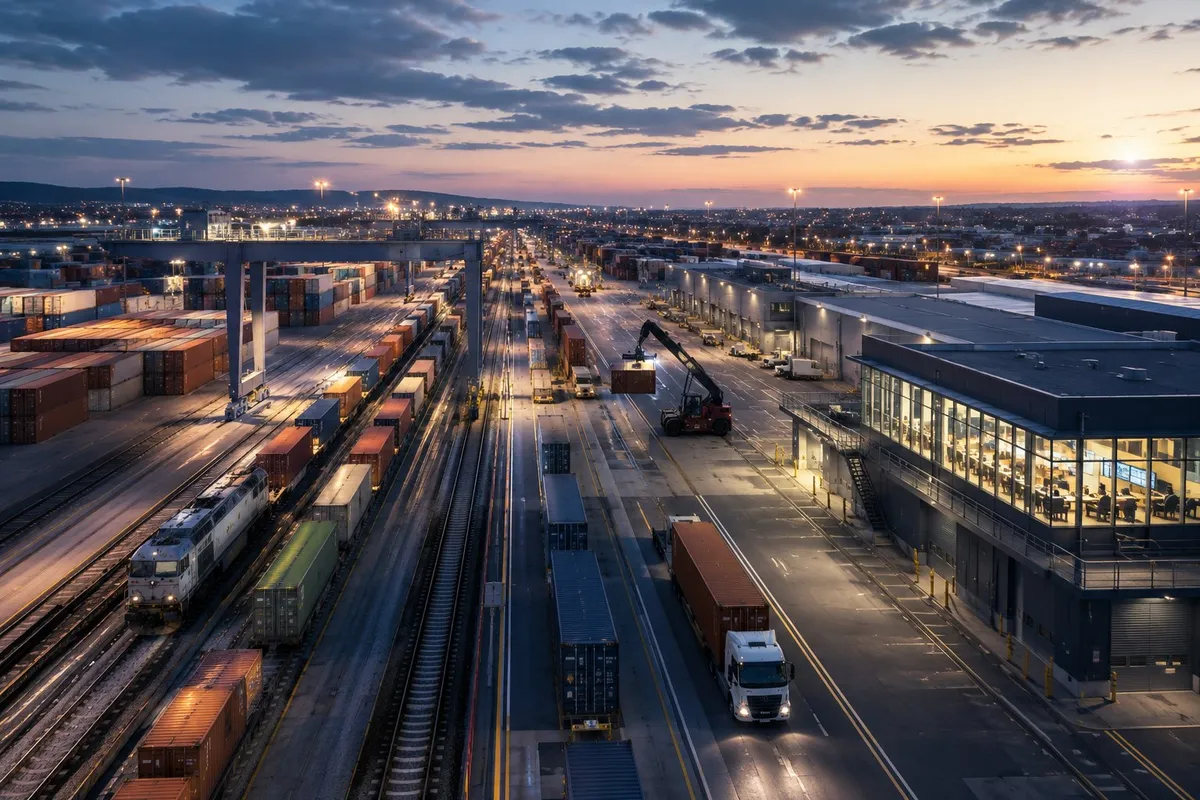
In this environment, intermodal terminals are moving into the spotlight. They are no longer simply transfer points between different modes of transport. Instead, they are becoming central coordination and information hubs whose operational performance directly impacts the quality and reliability of entire logistics networks.
Terminals as Digital Hubs
In the logistics networks of the future, terminals will connect not only physical cargo flows, but also data, processes and stakeholders. The real value lies in digital connectivity and end-to-end operational transparency.
A digital terminal can provide real-time visibility into unit movements, resource availability and time slot management. These data streams are consolidated within integrated systems and transformed into actionable operational insights. Bottlenecks can be identified earlier, processes become more stable, and coordination between stakeholders improves significantly.
Connected Infrastructure as the Foundation
This transformation requires powerful and connected IT infrastructures. Traditional standalone systems increasingly reach their limits because they lack both the transparency and integration capabilities modern logistics environments demand.
Future-ready terminals need systems that can map different operational processes on a shared data foundation, support standardised interfaces and adapt flexibly to evolving requirements. Especially in the context of eFTI and European-wide data initiatives, integration is becoming a prerequisite for participation in digital logistics ecosystems.
Automation Works Best as an Integrated System
In terminal operations, automation delivers its greatest value when all processes work together seamlessly. Digital systems enable dispatching, storage strategies, transshipment processes and gate operations to be coordinated dynamically and managed according to operational conditions.
Typical benefits of system-supported and partially automated operations include:
- More stable processes even during fluctuating volumes
- Reduced dependency on individual operational know-how
- Better utilisation of resources and terminal space
- Improved predictability for downstream partners
The true value is not necessarily full automation, but rather the reduction of manual intervention and the relief of operational teams.
Platform Integration as the New Standard
As logistics becomes increasingly platform-driven, standardised data exchange is becoming essential. Terminals must be able to automatically provide and receive status updates, order information and billing data.
Platform integration requires consistent data models, high data quality and clearly defined process logic. Terminals that meet these requirements position themselves as reliable partners within digital logistics networks and strengthen their role in increasingly connected value chains.
From Traditional Transshipment Site to Digital Hub
| Traditional terminal | Digital hub |
|---|---|
| Focus on physical transshipment | Focus on process and data orchestration |
| Limited operational transparency | Real-time visibility into units, resources and time slots |
| Manual or semi-digital dispatching | System-supported and connected process management |
| Isolated IT solutions | Integrated and modular system landscape |
| Limited platform connectivity | Active role in digital logistics ecosystems |
The Future of Terminals Is Decided by Integration and Data
The role of intermodal terminals will continue to evolve over the coming years. Their importance within logistics networks will no longer be determined solely by transshipment capacity, but by their ability to reliably connect processes, data and partners.
For terminal operators, this means:
- Digitalisation must be implemented strategically and step by step
- Integration becomes a critical competitive factor
- Systems must support growth, automation and emerging platform requirements alike
Modular and integrated IT structures provide the flexibility needed to actively shape this transformation and establish terminals as long-term digital hubs within future logistics networks.