RailHub Duisburg
- Sector
- Intermodal terminal
- Location
- Duisburg, Germany
- Operator
- Kombiverkehr Intermodal Services
- Rollout
- 5 months to go-live
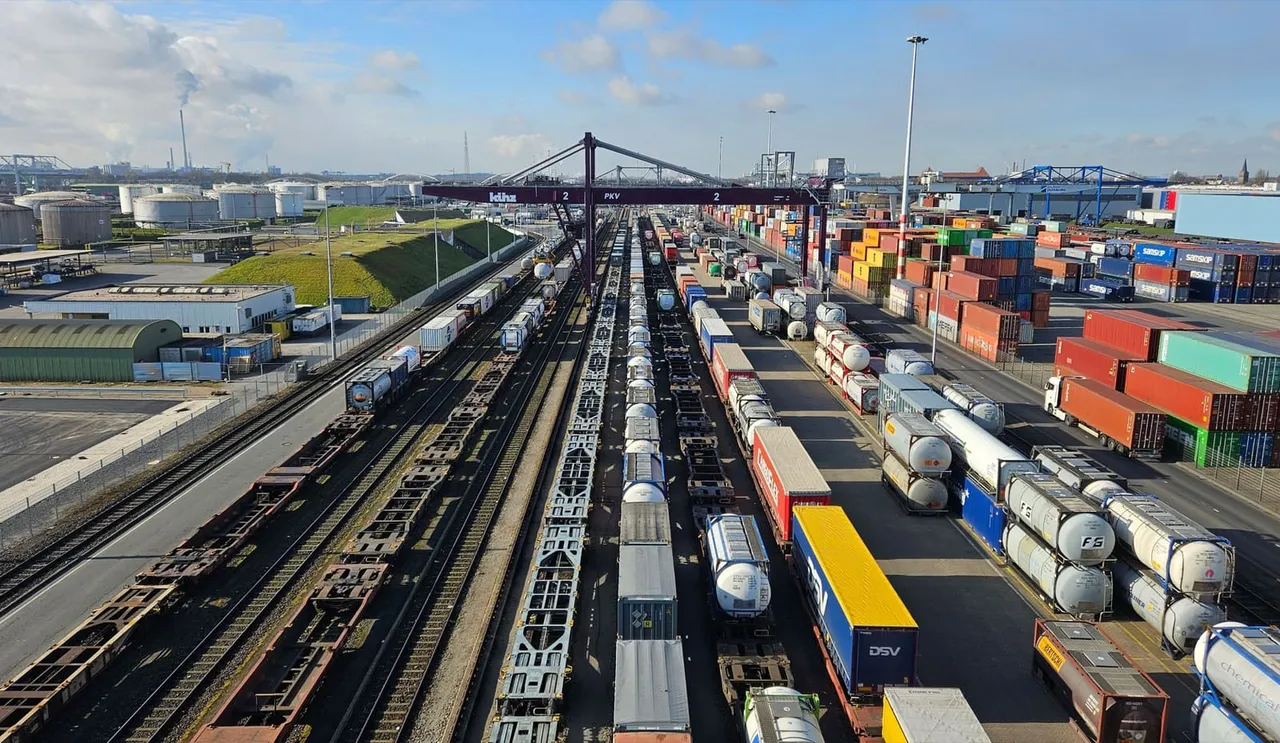
Taking over RailHub Duisburg meant having a completely new IT landscape ready by the handover date. The previous system could not be carried over, and there was no time for parallel operation or advance training.
A new terminal IT by the deadline
Starting point
Kombiverkehr Intermodal Services took over operations at RailHub Duisburg. A completely new IT landscape for terminal operations had to be in place by the handover date: the system used until then could not be carried over, and the change of staff on the handover date ruled out both parallel operation and step-by-step training.
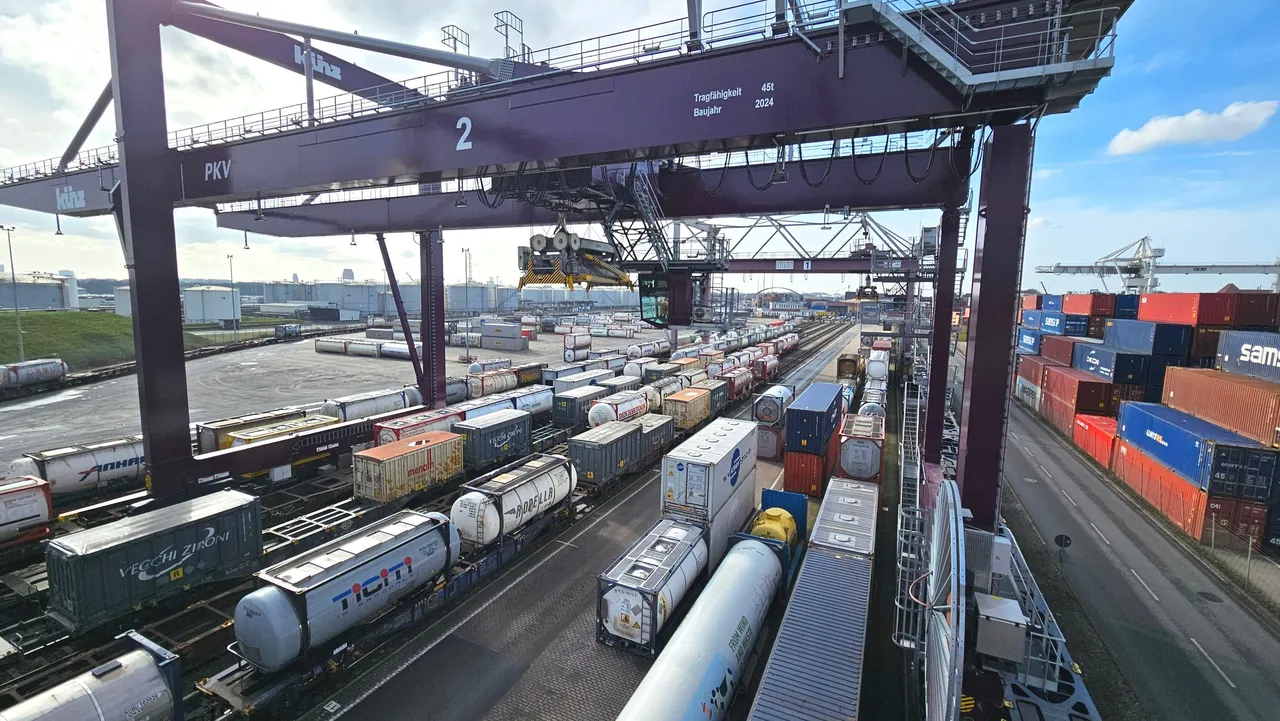
For a terminal of this size, that sets a high bar: train handling, yard management, lifting orders and truck processing interlock directly. If one of these processes fails, the whole terminal feels it.
Solution
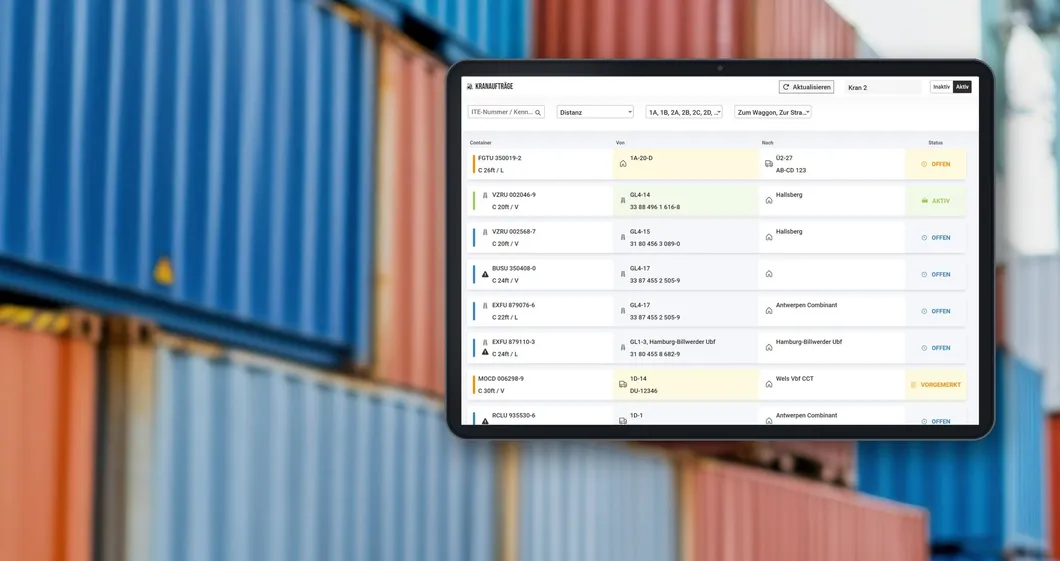
smartTOS was introduced as a terminal management solution whose modules can be activated individually while sharing a common data set. For this project that meant: not every function had to be finished by the deadline.
- Five project phases, from kickoff through workshops and interface integration to go-live and hypercare
- More than 15 data interfaces connected to the partner systems involved
- Close coordination with the operator throughout the introduction phase, with regular workshops and feedback loops
- Deliberately step by step: train inspection initially continued on paper lists and was integrated into smartTOS after the first trains had been handled
Result
Go-live took place on schedule with the operator handover, without a single day of parallel operation. Today smartTOS covers the key workflows at RailHub Duisburg digitally: from train pre-notification through yard management to truck handling, the processes interlock, data is captured once and is available along the entire workflow.
The modular structure remains the basis for future growth: a graphical real-time dashboard and self-check-in for truck drivers are planned as the next modules.
From project start to go-live
Five phases in five months. Go-live was not the end of a finished system but the date the operator changed. After that, support continued as hypercare.
Project start
Kickoff with the incoming operator, capturing the terminal processes and the schedule up to the handover date.
Workshops
Aligning the workflows on site: train handling, yard, lifting orders and truck processing, in the order in which they interlock.
Interface integration
More than 15 connections to partner and neighbouring systems, including the EDIGES link for message exchange.
Go-live
Production start exactly on the handover date, with no parallel operation, because the staff changed on that same day.
Hypercare
Close support after the start, until the workflows had settled and the next modules could be planned.
A look inside
More references
 Reference
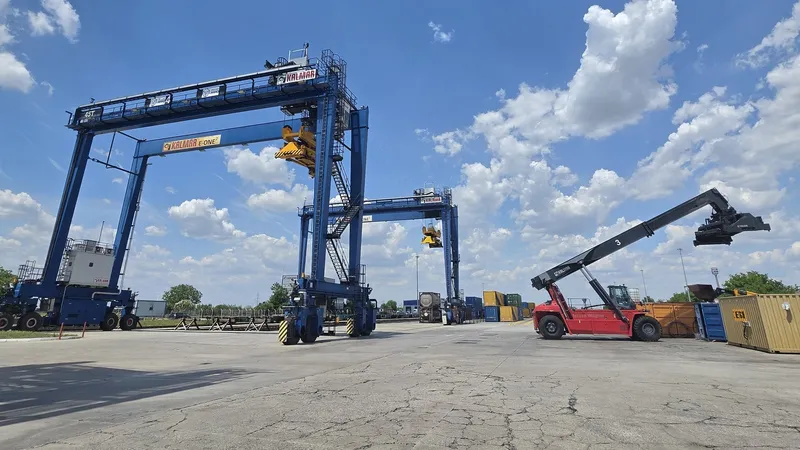
 Intermodal combined transport terminal · Arad, Romania
Railport Arad
Railport Arad S.R.L. is modernising and expanding its container terminal and replacing its existing legacy system.
 Reference
 Intermodal terminal · Kapfenberg, Austria
Kapfenberg Terminal
From paper-based handling to real-time control of yard, train dispatch and truck management: the complete digitalisation of an intermodal terminal.